
Running a Sex Offender Check in Fairfield County
The Connecticut Sex Offender Registry is the first official channel for a Fairfield County sex offender check. DESPP's Division of State Police operates it for the whole state. Fairfield County has no sheriff registration counter and no separate county list. Search by a person's name when it is known, or begin with a town, ZIP code, address, or map view when the aim is awareness around a place.
Gather the correct spelling, aliases, approximate age, and a known town before searching. Those details help separate similar names. The state registry is the source record for Connecticut publication. The national portal adds other jurisdictions, but it does not replace the Connecticut source or turn the result into a full background report.
Fairfield County Uses the DESPP Registry
Connecticut centralizes registration with the DESPP Sex Offender Registry Unit. Municipal police may receive an immediate safety report, yet they do not maintain a complete substitute for the state database. This matters in a county with many separate cities and police departments. A search limited to one local agency could miss a published address elsewhere in Fairfield County or a move recorded through the statewide process.
The unit is at 1111 Country Club Road, Middletown, CT 06457. It can be reached at 860-685-8060 or SORU@ct.gov, generally Monday through Friday from 9 a.m. to 3 p.m., excluding holidays. Use the unit for registry questions, corrections, and statutory registration guidance.
Searching the Connecticut Sex Offender Registry
The official interface offers several routes, so the best path depends on what is already known. A name search is suited to a known person. Town, ZIP, address, radius, and map tools support a place-based Fairfield County registry check. Controls can vary by device, and radius options should be read from the live interface.
- Open the official registry and read its conditions and misuse warning.
- Enter a last name and optional first name, or choose a town, ZIP, address, and available radius.
- Review the result list without assuming that a similar name identifies the person sought.
- Open a profile and compare the photo, aliases, descriptors, address status, offense, and registry status.
| Field Label | Type | Required | Notes |
|---|---|---|---|
| Last Name | Text | Optional route | Use the official spelling; this can start a name search. |
| First Name | Text | No | Narrows a last-name search. |
| City/Town or ZIP | Text or selection | No | Focuses results on a Connecticut municipality or postal area. |
| Address | Text | No | Supports proximity searching where enabled. |
| Radius and Map/List | Selection and view | Conditional | Read current distance choices in the live tool. |
Fairfield County Name and Map Searches
Name and location searches answer different questions. A name search tests whether a known person appears under the spelling entered. An address or map search shows published registrations near a location, subject to the portal's current radius and dissemination rules. Neither route proves that every person with a past sex offense will appear publicly.
The official NSOPW page shows how a national layer complements the state tool.
View the Dru Sjodin National Sex Offender Public Website source.
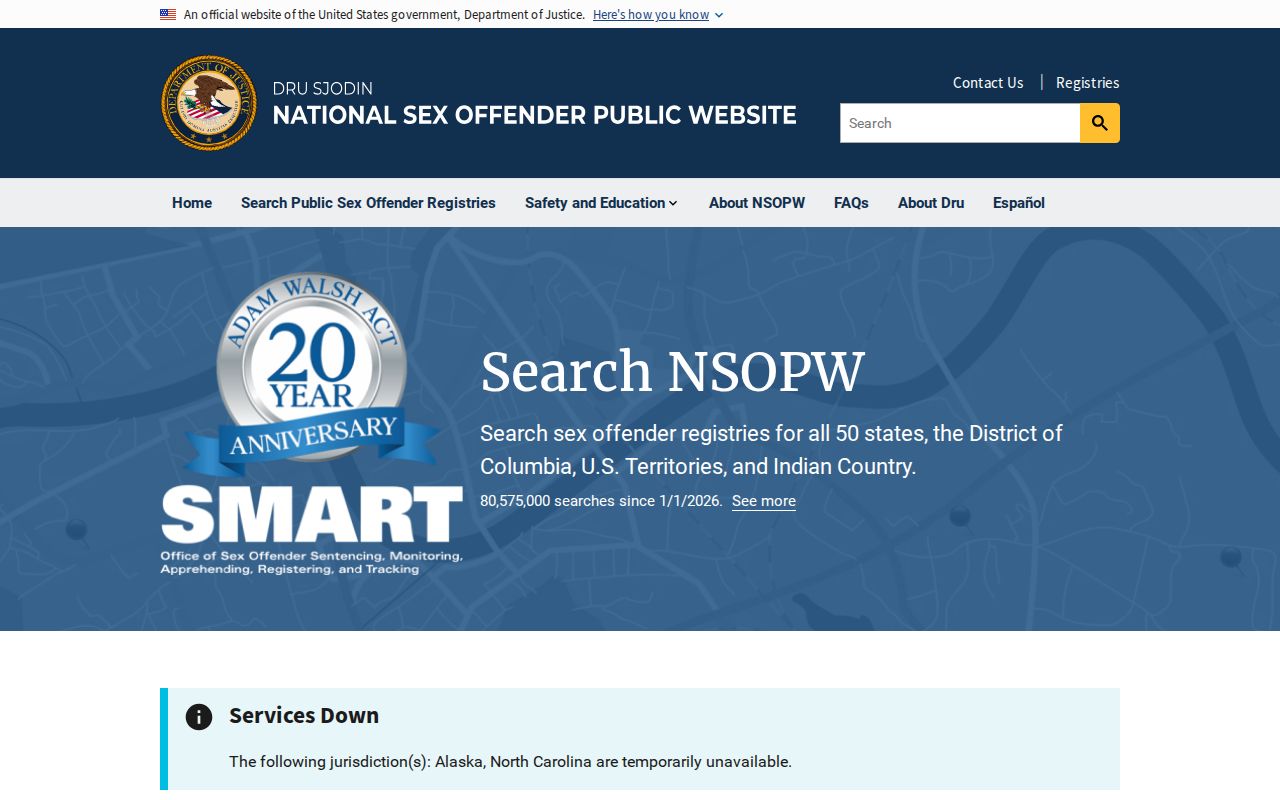
Use a national result to identify the publishing jurisdiction, then open that jurisdiction's official record for the current details.
What a Registry Profile Shows
A Fairfield County registry profile can combine identity, address, offense, and status fields. Exact fields vary with statutory category and available data, so an empty field should not be filled by inference. Compare several identifiers before concluding that a profile concerns the person sought.
| Name & Aliases | Published legal name and known aliases used to distinguish identities. |
|---|---|
| Photo & Physical Description | Photograph, physical descriptors, and scars, marks, or tattoos where published. |
| Registered Address | Reported residence and address status; work or school data may appear when authorized. |
| Offense & Statute | Conviction or adjudication information, offense description, and cited law when available. |
| Requirement / Category | The legal registration basis or category, not a homegrown risk label. |
| Registration Status | Registry, compliance, or violation information shown in the public record. |
Fairfield County Profiles Are Not Risk Scores
Connecticut's public scheme is offense-triggered. It is not a simple low, medium, and high risk map, and federal SORNA tiers should not be pasted onto a Connecticut profile unless that record expressly uses them. Registration can turn on the offense, its date, repeat status, the victim category, and a court order.
This distinction prevents two common errors. A long registration period is not a personalized forecast, and the absence of a public profile is not a complete statement about someone's criminal record. For broader record context, use the official court and SPBI channels described in the county criminal-history overview.
Registration Requirements and Levels in Connecticut
Connecticut law uses offense and requirement categories rather than a public three-tier risk scale. Sections 54-251 and 54-252 provide common ten-year and lifetime paths, while repeat and offense-specific rules may change the outcome. Verification and change reporting follow the statute and current DESPP advisement.
| Statutory route | Duration | Public meaning |
|---|---|---|
| Specified minor-victim or nonviolent offenses under §54-251 | Generally ten years for qualifying cases | Offense-based registration, subject to the exact statute and case. |
| Repeat or other specified cases under §54-251 | Lifetime in enumerated cases | Repeat and offense details control; no generic risk score should be inferred. |
| Sexually violent offenses under §54-252 | Lifetime | Statutory category controls registration and verification duties. |
| Restricted dissemination under §54-255 | Case-specific | A court may restrict public dissemination in defined circumstances. |
Fairfield County Address and Verification Duties
Registrants must provide identifying and case information required by Connecticut law and the current advisement. The form includes name, community-release date, SPBI number or date of birth, docket number, and a complete residence rather than a post-office box. It also calls for city or town, ZIP code, certifications, signatures, and dates.
Address, name, and certain travel changes must be reported under the applicable schedule. Searchers should therefore pay attention to the profile's address status and update information instead of treating one screen capture as permanent. The State Police forms index is the proper place to confirm the latest advisement.
Review the official Connecticut State Police forms source.
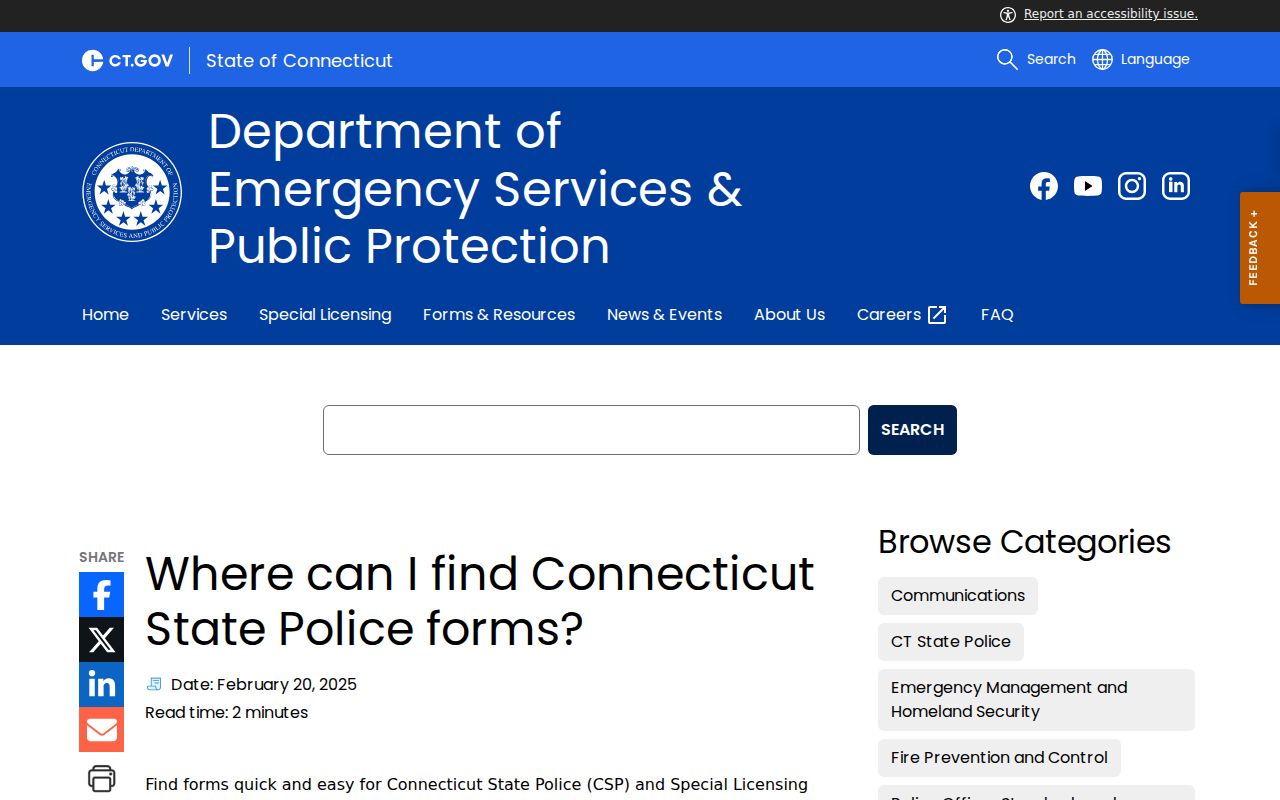
The current form, not an old checklist or county office assumption, controls what must be supplied.
Connecticut Registry Statutes for Fairfield County
Chapter 969 contains the core registration provisions in §§54-250 through 54-261. The Penal Code supplies the offense definitions that may underlie a duty. Reading both sources avoids reducing a case to a profile label without its legal context.
Read Connecticut's official criminal-record and registry statutes.
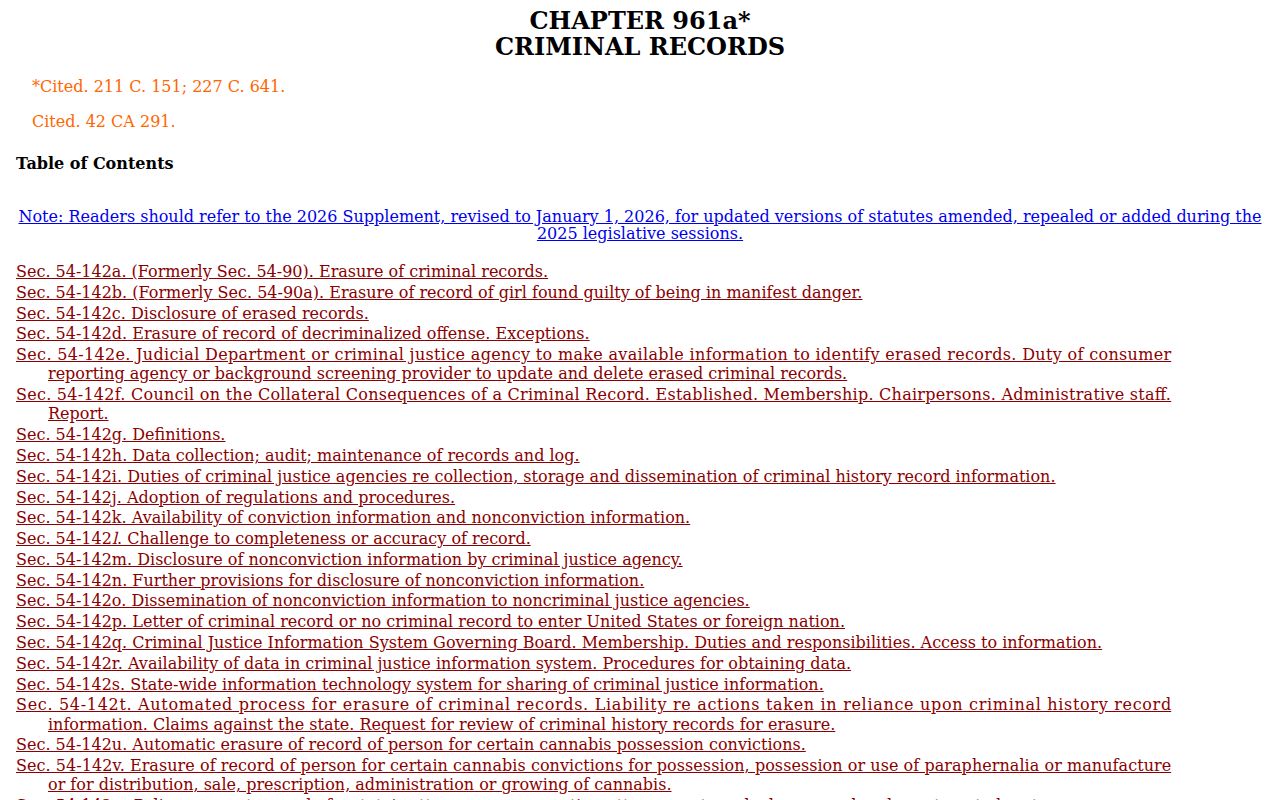
The current text identifies registration, dissemination, verification, and misuse rules that can differ by case.
Read the official Connecticut Penal Code source.
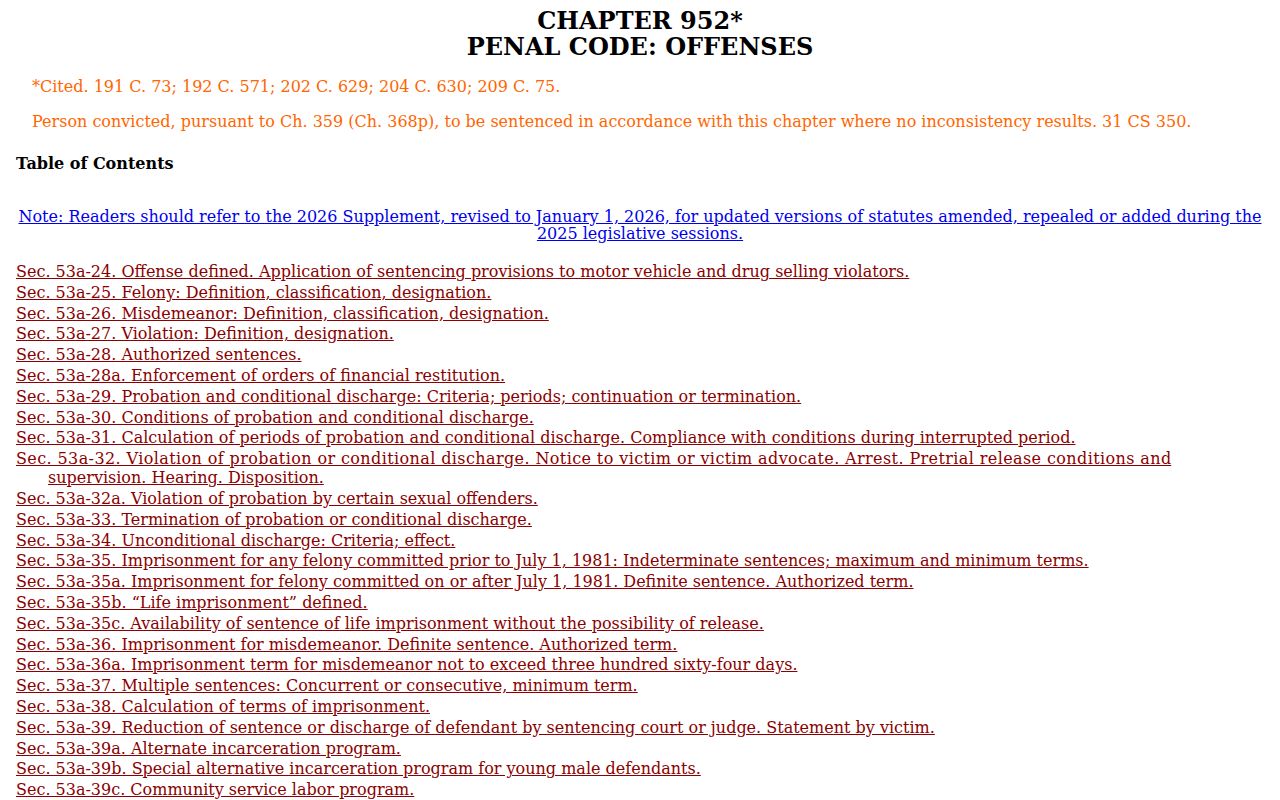
Offense definitions should be checked in the law rather than guessed from a short registry description.
Lawful Use and Community Notification
The registry supports awareness and sensible safety planning. Connecticut documents name, town, ZIP, full-list, map, and address-radius methods. Its confidential notification service advertises an alert when a published registrant registers within one mile of an address supplied by the subscriber. An alert is a prompt to consult the current official profile, not a reason to confront anyone.
Misuse is prohibited: C.G.S. §54-258 and related provisions prohibit using registry information to injure, harass, or commit a crime. Never threaten, confront, or intimidate a registrant or household.
Report suspected noncompliance to the DESPP registry unit or local police. Call 911 only for an immediate danger. If data appears wrong, give the registry unit the profile and the specific field in question; a private edit or repeated search cannot correct the source record.